

Waterproof Islamic Jewellery: Ayatul Kursi Pieces for Daily Wear
Islamic jewellery is worn through wudu, Ramadan heat and family beach days. What makes it waterproof, how engraving lasts and the bathroom question.
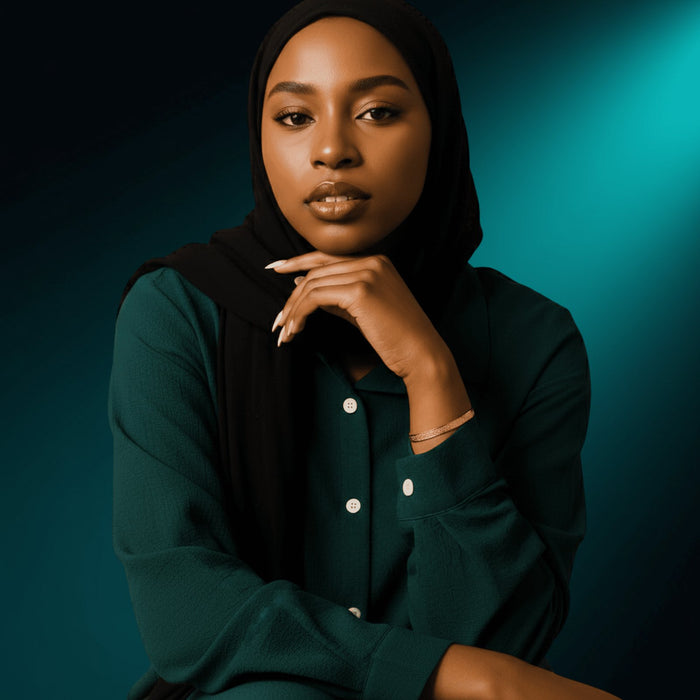
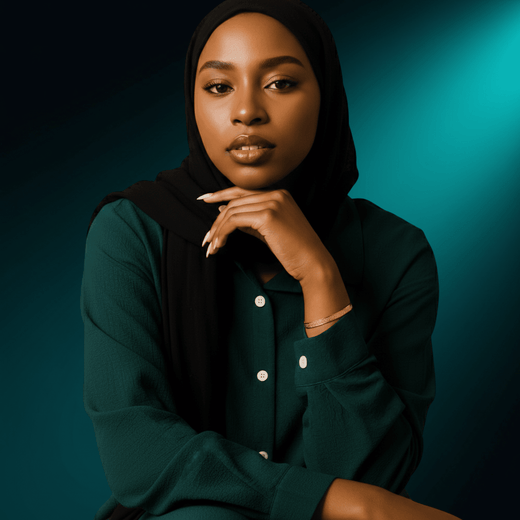
Islamic jewellery is worn differently from fashion jewellery. An Ayatul Kursi bracelet or a ring engraved with the Ayah is not something you put on for an evening and take off at night. It is worn through wudu five times a day, through hot Ramadan afternoons, at the beach with the family and on the long journey to Umrah. That kind of wear needs a piece that water does not touch.
This guide explains what makes Islamic jewellery waterproof, how our engraving is made to last, what to know about wudu and the bathroom, and which NUUR pieces suit women, men, couples and babies. Every piece mentioned is 316L stainless steel, finished in 18K gold plating, 18K rose gold plating, silver or black. You will find the whole line in our Islamic jewellery collection.
Why waterproof matters for Islamic jewellery
Most Islamic jewellery sold in South Africa is made the same way as cheap fashion jewellery: a brass or zinc alloy base with a thin coloured layer on top. That is fine for a piece you wear twice a month. It is not fine for a piece that meets water many times a day.
Think about a single day of wear. Wudu before Fajr, Dhuhr, Asr, Maghrib and Isha puts water on your hands, wrists and forearms five times. Add hand washing, cooking and the heat of a South African summer, and an ordinary bracelet is wet and dry dozens of times before bed. Brass based pieces darken, the colour wears away at the edges and many leave a green mark on the wrist. For a piece carrying the words of the Quran, that kind of deterioration feels wrong.
A 316L stainless steel base solves this. 316L is the grade used for medical instruments and boat fittings because it resists water, salt and sweat, and it contains no copper to turn skin green. Our guide to 316L stainless steel jewellery explains the metal in detail.
Engraved, not printed
The second thing that matters for Islamic jewellery is how the Arabic script is made. Many low cost pieces print or stamp a thin layer of script onto the surface. Printed script fades with handling and water, and within months the Ayah can become hard to read.
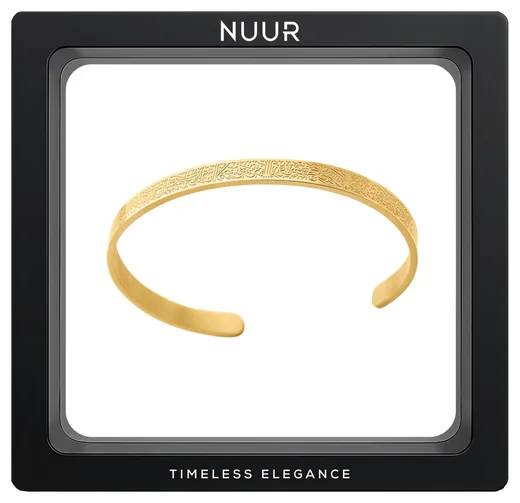
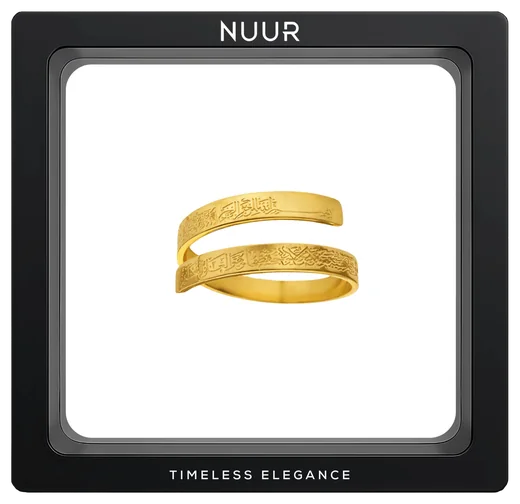
On NUUR pieces the script is engraved, cut into the metal itself. On the Ayatul Kursi Bracelet, the Ayah is engraved in Arabic across the face. On the Ayatul Kursi Ring, it is engraved around the full band. Because the letters are part of the metal rather than a layer on top, water and daily wear cannot wash them away. To understand the meaning of what you are wearing, read Ayatul Kursi jewellery meaning and how to wear it and our page on the meaning of Ayatul Kursi in jewellery.
Wudu and waterproof jewellery
From the metal's point of view, wudu is simply water, and 316L stainless steel does not mind it at all. You can make wudu wearing a NUUR bracelet or ring every time, and the piece will keep its colour and its engraving.
There is also a practical point that many Muslims already know. For wudu, water should reach the skin under anything you wear on the hands and arms. Many scholars advise moving or turning a ring, and shifting a close fitting bracelet, so that water reaches the skin beneath it. With waterproof jewellery that is easy, because there is no reason to worry about the water itself. If you have a specific question about your wudu, your local imam is the right person to ask.
What about the bathroom?
Many Muslims ask the same thing: can you wear an Ayatul Kursi bracelet in the bathroom?
Our answer is clear: we do not recommend wearing Islamic jewellery in the bathroom or the toilet. Please take your Ayatul Kursi pieces, and any piece carrying Quranic text or the name of Allah, off before you go in.
This has nothing to do with the metal. Water, steam and soap do not harm 316L stainless steel. It is about respect for the words engraved on the piece, and it follows the guidance many scholars give on carrying Quranic text into a toilet.
Our pieces are designed to make that respect easy. The Ayatul Kursi Bracelet is open at the back, so it slides off the wrist and back on in a second, with no clasp to fiddle with. Keep its gift box or a small pouch nearby so it always has a clean place to rest. Our jewellery care guide covers caring for engraved pieces day to day.
The beach, the pool and the gym
Family days at the beach are part of South African life, from the Durban beachfront to the Strand. Salt water is the hardest everyday environment for most metals, and it is where 316L stainless steel shows its value, because the molybdenum in it resists salt. The same applies to chlorinated pools and the sweat of a gym session.
You can swim and train in every NUUR piece. A quick rinse in fresh water after the sea or the pool and a pat dry are all it needs. For more on wearing jewellery through an active day, see the Ayatul Kursi bracelet for daily wear.
Umrah, Hajj and travel
Travel is where waterproof jewellery earns its place. On Umrah or Hajj you are in intense heat, you make wudu constantly and there is little time or space to look after delicate pieces. A bracelet or ring that does not need to come off for water, does not tarnish in the heat and does not mark the skin removes one more thing to think about.
For travel, choose pieces with nothing to snag or catch. The Ayatul Kursi Bracelet has no clasp. The Sabr Bracelet is 17 cm with a 6 cm extender, so it can be loosened in the heat when wrists swell.
Waterproof Islamic jewellery for women
The Ayatul Kursi Bracelet
Our signature piece. The Ayah is engraved in Arabic across the face, it measures 17 cm end to end around a 6.3 cm inner diameter and weighs 17 g. It is open at the back, so there is no size to guess. It comes in 18K gold plated, 18K rose gold plated, silver and black finishes. Read Ayatul Kursi bracelet or necklace, which one to buy if you are deciding between pieces.
The Ayatul Kursi Ring
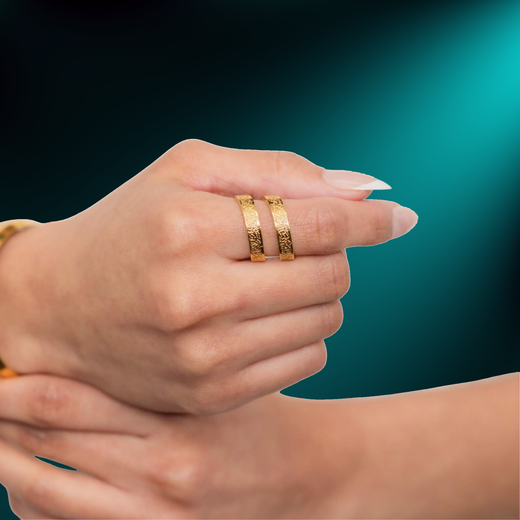
A wrap ring with the Ayah engraved around the whole band, 8 mm tall and 17 mm across the inside, in 18K gold plated, 18K rose gold plated, silver and black. At 8 mm it is wide enough for the script to hold its shape and narrow enough for daily wear. More in the Ayatul Kursi ring.
The Sabr Bracelet and Sabr Necklace
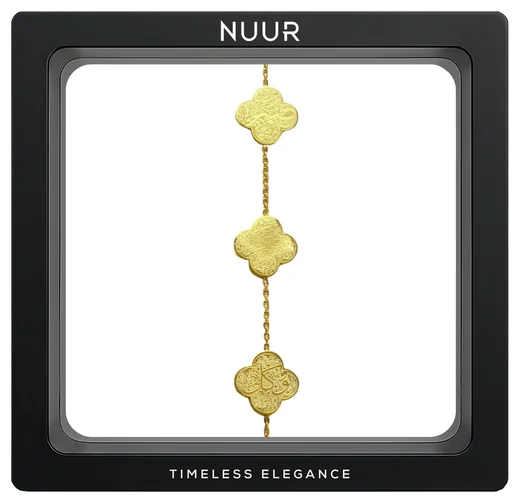
Sabr means patience. The Sabr Bracelet is a clover chain with script engraved on every 10 mm clover station, 17 cm with a 6 cm extender. The Sabr Necklace hangs a single 10 mm clover on a 1.8 mm rope chain. Both come in 18K gold plated, 18K rose gold plated and silver, so they can be matched.
The Moon Necklace
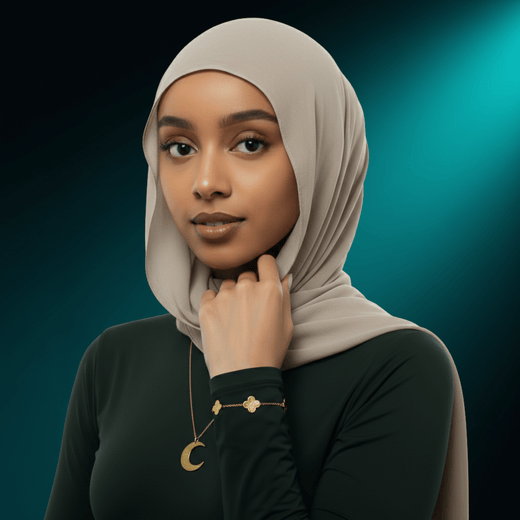
The Moon Necklace carries Arabic script engraved into a 40 mm crescent, on a 1.8 mm chain of 45 cm with a 5 cm extender. At 40 mm the engraving is large enough to read when she looks down. It comes in 18K gold plated, 18K rose gold plated, silver and black.
Waterproof Islamic jewellery for men
In Islam, gold jewellery is widely held to be for women rather than men, so our men's pieces are made in silver and black finishes. Our articles on gold plated jewellery in Islam and whether white gold is haram for men discuss the views in more detail.
- The Ayatul Kursi Bracelet for Men, silver or black, 17 cm end to end around a 6.3 cm inner diameter.
- The Ayatul Kursi Ring for Men, black or silver, 8 mm tall.
- The Zulfiqar Necklace, an engraved sword pendant 5.8 cm tall on a 60 cm chain, left as polished stainless steel with no plating, worn by men and women.
Browse them together in men's jewellery.
For couples and families
His and hers
The His and Hers Ayatul Kursi Bracelet Set carries the same engraving on two bracelets, one 18K gold plated for her and one silver for him, each 17 cm end to end. It is a natural gift for a nikah, walima or anniversary. Our guide to nikah and walima jewellery gifts has more ideas.
Mother and baby
The Ayatul Kursi Mom and Baby Bracelet Set pairs a bracelet for mum with a small one for her child. The Baby Ayatul Kursi Bracelet on its own is 10 cm long and 10 mm high. Babies dribble and put everything in their mouths, so a waterproof piece with no copper matters even more here. Always supervise small children wearing jewellery. Our guide to baby and children's Ayatul Kursi bracelets covers sizing and safety.
Choosing a finish
All four finishes sit on the same 316L stainless steel base, so the choice is about style rather than durability.
- 18K gold plated is warm and classic, and the most traditional look for women's pieces.
- 18K rose gold plated is softer and pinker, and sits well beside rose toned watches.
- Silver is cool and understated, and the usual choice for men.
- Black is modern and bold, and makes the engraving stand out strongly.
Caring for engraved pieces
Engraved jewellery needs very little care, but a few habits keep the Arabic script crisp and the finish bright for longer.
- Rinse after salt and chlorine. Salt water and pool water will not harm 316L stainless steel, but residue can settle in the grooves of the engraving. A rinse in fresh water and a pat dry keep the letters clean.
- Clean the engraving gently. If soap or lotion builds up in the script, use warm water, a drop of mild soap and a very soft brush, then dry with the care cloth. Avoid toothpaste and abrasive cleaners, which can scratch the plating.
- Store it with respect. When you take a piece off, place it in its gift box or a soft pouch rather than loose on a counter. This protects the finish and keeps the Ayah in a clean place.
- Keep hard pieces apart. Steel is harder than plating, so a ring stored against a bracelet can mark it. Store pieces separately.
For step by step cleaning, read how to clean gold plated jewellery at home.
A gift that arrives ready
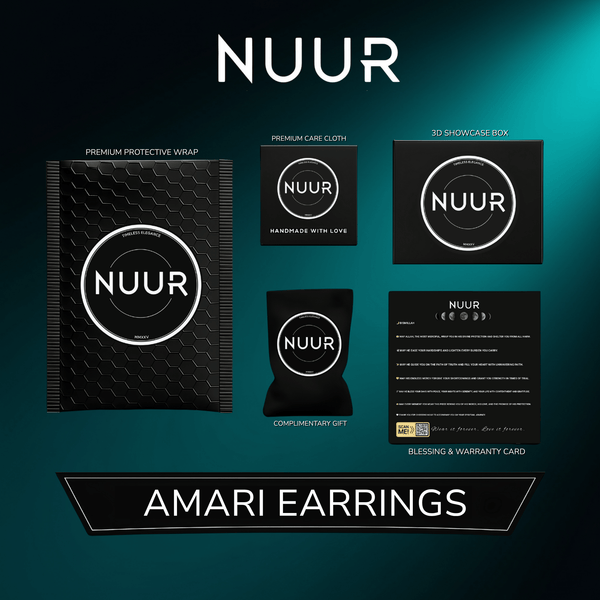
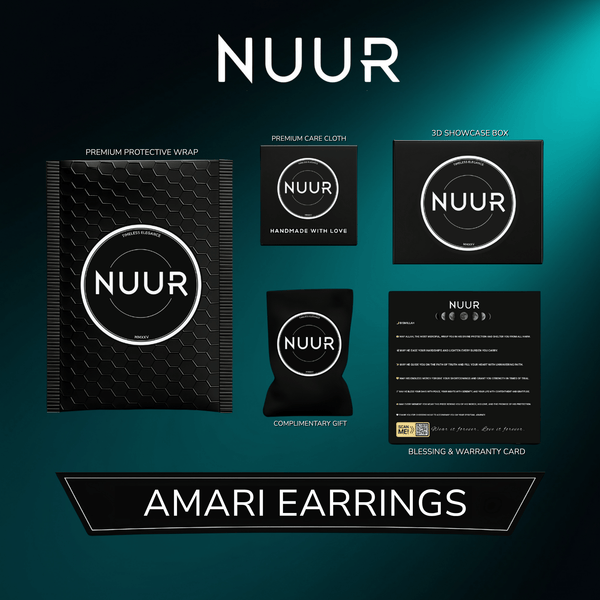
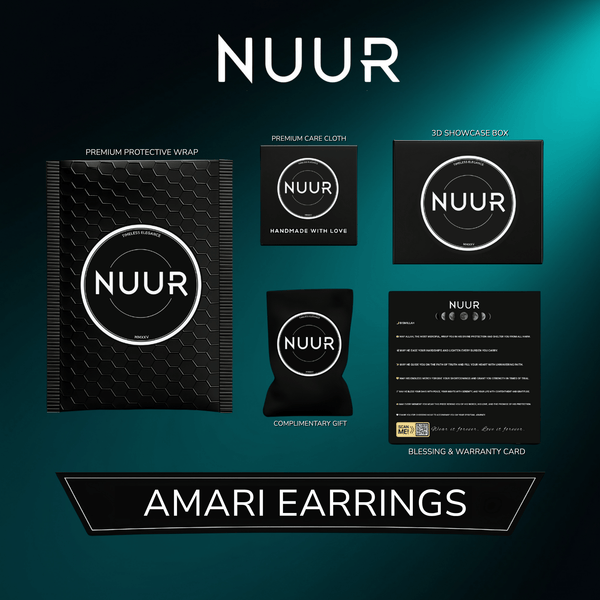
Every Islamic piece arrives in a gift box with a care cloth and a Prayer & Warranty Card. The card carries a prayer on the front and our six month warranty on colour fading and manufacturing defects on the back. Delivery is free across South Africa, orders are dispatched within 24 hours on business days and usually arrive in 1 to 3 working days.
For Eid, Ramadan, a new baby or a nikah, our Islamic gifts collection and the Islamic jewellery gift guide are good places to start.
Questions about waterproof Islamic jewellery
Can I make wudu wearing an Ayatul Kursi bracelet?
Yes. Water does not harm 316L stainless steel, so the bracelet keeps its colour and engraving. Many scholars advise shifting a close fitting bracelet or ring so water reaches the skin beneath it.
Can you wear an Ayatul Kursi bracelet in the bathroom?
We do not recommend it. Please take Ayatul Kursi pieces and any jewellery carrying Quranic text off before entering the bathroom or the toilet, out of respect for the Ayah. The bracelet is open at the back, so it slides off and back on in a second. Water does not harm the metal; this is about respect, not care.
Can I swim in the sea with Islamic jewellery?
Yes. Every NUUR piece is 316L stainless steel, which resists salt water and chlorine. Rinse it in fresh water and pat it dry afterwards.
Will the engraving fade?
No. The Arabic script on NUUR pieces is engraved into the metal rather than printed on top, so water and daily wear cannot wash it away.
Is there Islamic jewellery for men that is not gold?
Yes. The Ayatul Kursi Bracelet for Men and Ayatul Kursi Ring for Men come in silver and black finishes, and the Zulfiqar Necklace is polished stainless steel with no plating.
Does the jewellery turn the skin green?
No. A green mark comes from copper reacting with sweat. 316L stainless steel contains no copper, so it cannot leave that mark.