

Waterproof vs Non Tarnish vs Hypoallergenic Jewellery: What Is the Difference?
Three words on every jewellery listing, three different questions. What each one means, where they overlap and the material that makes all three true.

Waterproof, non tarnish and hypoallergenic are the three words you see on almost every jewellery listing in South Africa, often all at once. They sound similar, but they answer three different questions. Waterproof is about what water does to the piece. Non tarnish is about what the air and time do to its colour. Hypoallergenic is about what the piece does to your skin.
A piece can honestly be one of these and not the others. Knowing the difference is the quickest way to stop buying jewellery that looks perfect on the day and disappoints by the end of the month. This guide explains each claim, where they overlap, what material makes each one true, and how to check a listing before you pay.
The short answer
If you only remember one thing, remember this:
- Waterproof means water, sweat, salt and chlorine do not damage the piece, so you can wear it in the shower, the sea and the pool.
- Non tarnish means the surface keeps its colour and shine instead of darkening, clouding or going patchy over time.
- Hypoallergenic means the piece is made to minimise the chance of skin irritation for people with sensitive skin.
All three come back to the same root: the base metal underneath the colour. When that base is 316L stainless steel, as it is in every NUUR piece, the three claims support each other. When the base is brass or copper, all three are fragile, no matter what the label says. You can see every piece that meets all three in our waterproof jewellery collection.
What does waterproof jewellery mean?
There is no official test that a piece of jewellery must pass to be called waterproof, which is why the word is used so loosely. In practice it should mean that everyday water, including showers, hand washing, rain, sweat, the sea and chlorinated pools, does not rust, corrode, discolour or weaken the piece.
Water on its own is rarely the problem. The problem is what water carries with it. Sea water and sweat carry salt. Pools carry chlorine. Soap, shampoo and sunscreen add their own chemistry. Metals that react with these substances, mainly copper, brass, silver and low grade steel, start to show it quickly: a dark line along a chain, a dull patch on a ring, a green mark on the skin.
Truly waterproof jewellery uses a base metal that does not react in those conditions. 316L stainless steel is the standard choice because the molybdenum in it resists salt and chlorine. Our article on what 316L stainless steel is explains why in detail, and jewellery you can wear in the shower and gym shows how that plays out day to day.
What waterproof does not mean
Waterproof does not mean scratch proof, and it does not mean the 18K gold plating can never wear. Plating can thin over time where a piece rubs against hard surfaces, such as the underside of a ring that meets a desk all day. That is a question of abrasion, not water. It is also why we put a six month warranty on colour fading and manufacturing defects on every piece.
What does non tarnish jewellery mean?
Tarnish is a slow chemical change on the surface of a metal. Silver darkens because it reacts with sulphur compounds in the air, forming silver sulphide. Brass and copper dull and turn brownish or green as they oxidise. Cheap plating clouds and turns patchy as the metal underneath reacts and pushes through.
Non tarnish jewellery is jewellery whose surface does not go through that change in normal wear. Solid gold is naturally non tarnish. So is 316L stainless steel, because its chromium oxide film blocks the reaction. When 316L is finished with 18K gold plating, you get a piece that keeps its colour because neither the plating nor the base underneath is reacting with the air.
Non tarnish and waterproof are close cousins, because water and sweat speed up tarnish. A piece that tarnishes on a shelf will tarnish much faster on a sweaty wrist in a Johannesburg summer. Our guide to tarnish free jewellery in South Africa covers this in more depth, and how to store jewellery so it does not tarnish helps with the pieces you already own.
Non tarnish versus tarnish resistant
You will also see "tarnish resistant". This usually means a protective coating has been added over a reactive metal. It slows tarnish down, but once the coating wears, the metal underneath behaves as it always did. Non tarnish built into the base metal is the stronger promise, because there is no coating to wear through.
What does hypoallergenic jewellery mean?
Hypoallergenic means "below normal allergenic", in other words, less likely than usual to cause a reaction. Like waterproof, it is not a regulated word, so it is only as good as the material behind it.
Skin reactions to jewellery usually come from metal ions released when sweat meets a reactive metal. The result can be redness, itching, small bumps or a rash where the piece touches the skin, most often on earlobes, because a pierced ear gives the metal direct contact with tissue. Cheap alloys and brass bases are the most common culprits.
A hypoallergenic piece uses a stable base that releases very little into sweat. 316L stainless steel is widely used for exactly this reason, and it is also why it is the standard for medical instruments. Every NUUR piece, including every earring post, is 316L stainless steel. You will find our gentlest pieces together in jewellery for sensitive skin, and the earrings in hypoallergenic waterproof earrings.
One honest note: hypoallergenic lowers the risk, it does not remove it for every person. If you have a diagnosed metal allergy, ask your doctor or dermatologist which metals suit you.
How the three claims compare
Here is the difference in one place.
| Claim | The question it answers | What makes it true |
|---|---|---|
| Waterproof | Can I wear it in the shower, sea and pool? | A base metal that resists salt, chlorine and sweat |
| Non tarnish | Will the colour stay? | A base and surface that do not react with air and moisture |
| Hypoallergenic | Will it irritate my skin? | A stable base that releases very little into sweat |
Notice that the right hand column keeps pointing at the same thing. That is why one good material choice delivers all three, and one poor choice undermines all three.
Can a piece be one without the others?
Yes, and this is where most disappointment comes from.
- Hypoallergenic but not waterproof. Some pieces use a skin friendly coating over brass. They may feel fine on day one, but once water and sweat wear the coating, the brass is back against your skin and the piece is neither waterproof nor hypoallergenic any more.
- Non tarnish on the shelf, not on the wrist. A lacquered piece can stay bright in a drawer for months and dull within weeks of daily wear, because sweat and soap break down the lacquer.
- Waterproof but not hypoallergenic. Lower grade stainless steels resist water reasonably well but can still irritate sensitive ears. The grade matters, which is why 316L is specified rather than just "stainless steel".
- Sterling silver. Silver suits many sensitive skins, but it tarnishes, and it does not like chlorine or the sea. It is often hypoallergenic without being waterproof or non tarnish.
Which matters most for you?
All three matter, but your daily life decides which one you will notice first.
You are active or near the water
If you train, swim, surf, live at the coast or simply hate taking jewellery off, waterproof is your first filter. Bracelets and rings get the most water, because hands are washed many times a day. Start with waterproof bracelets and waterproof rings.
You care most about the colour
If you want your jewellery to look the same in a year as it does on day one, non tarnish is your filter. Necklaces show tarnish first, because they sit against skin and perfume. Our waterproof necklaces are a good place to begin, and the 18K gold plated necklace buying guide explains what to look for.
You have sensitive ears or skin
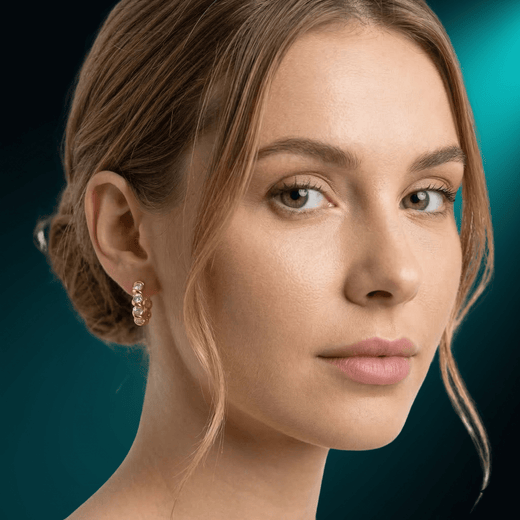
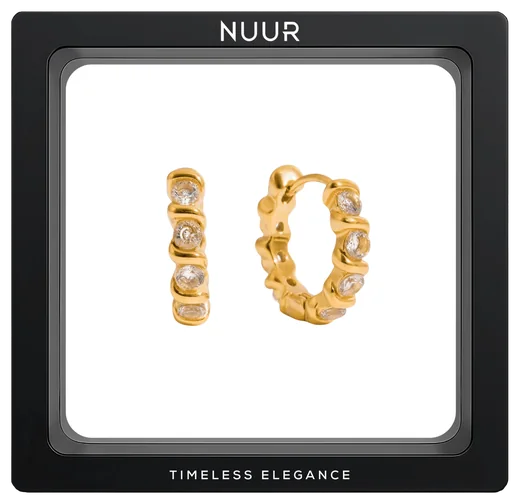
If cheap earrings leave your lobes red or itchy, hypoallergenic is your first filter, and earrings are where it matters most. Small huggies like the Luna Earrings, 1.10 cm across and 1.8 g the pair, or the Elira Earrings, with zircon all the way around a 3.8 mm band, are easy first pairs. Read the best hypoallergenic earrings for sensitive ears for more.
How to check a listing before you buy
Because none of these words is regulated, the listing has to earn your trust. Five checks take less than a minute:
- Find the base metal. Look for the actual material, ideally "316L stainless steel". If the listing only says "alloy", "fashion metal" or nothing at all, assume brass or zinc alloy.
- Read the care instructions. If a "waterproof" piece tells you to remove it before showering, believe the care instructions, not the headline.
- Check the plating wording. "18K gold plated" tells you the colour comes from real 18K gold plating. "Gold tone" or "gold colour" usually means a coloured coating with no gold in it.
- Look for a written warranty. A brand confident in its claims puts a warranty on colour. Ours covers colour fading and manufacturing defects for six months.
- Check the returns policy. Our returns window is 14 days from delivery for unused pieces in their packaging. Earrings cannot be returned for hygiene reasons unless they arrive damaged or defective, so choose earrings with the sizes on their product page in mind.
Where NUUR fits
Every NUUR piece is 316L stainless steel finished in 18K gold plating, 18K rose gold plating, silver or black, depending on the design. That one material choice is what lets us describe the whole range as waterproof, non tarnish and hypoallergenic together, and tell you to shower, swim and train in it.
A few pieces that show the range across the three claims:
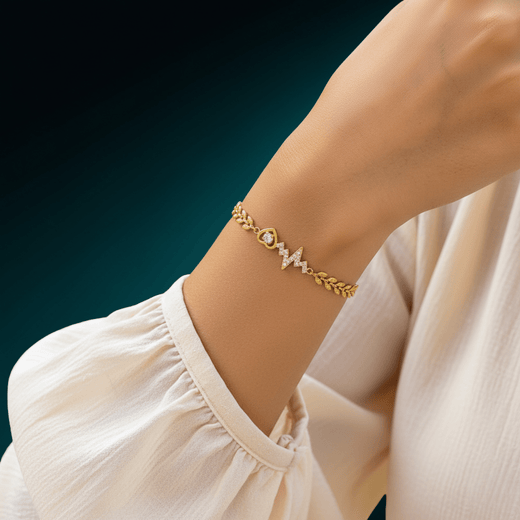
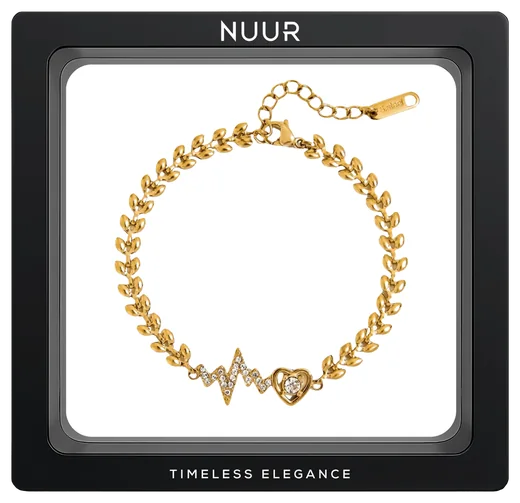
- The Amelia Bracelet, a heartbeat line of zircon with a heart charm, 16.5 cm with a 5 cm extender and 3.9 g, light enough to forget you are wearing.
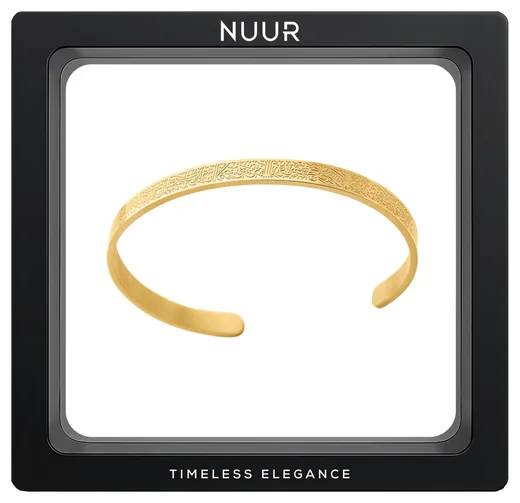
- The Celeste Bracelet, a slim zircon bangle that slides on with no clasp, 5.20 cm across the inside.
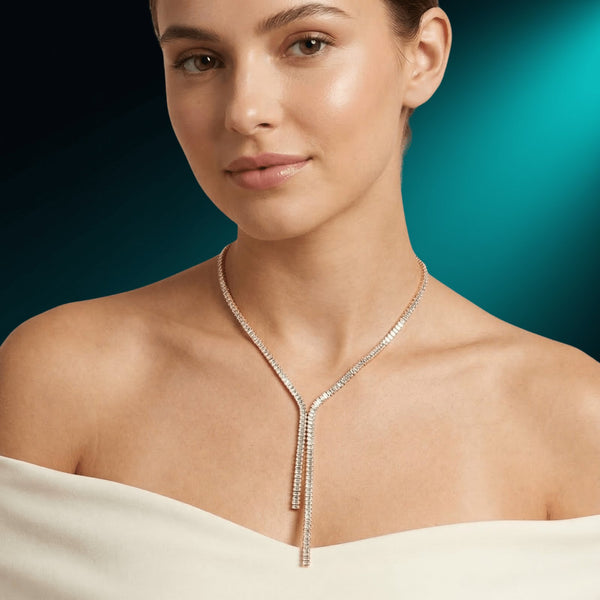
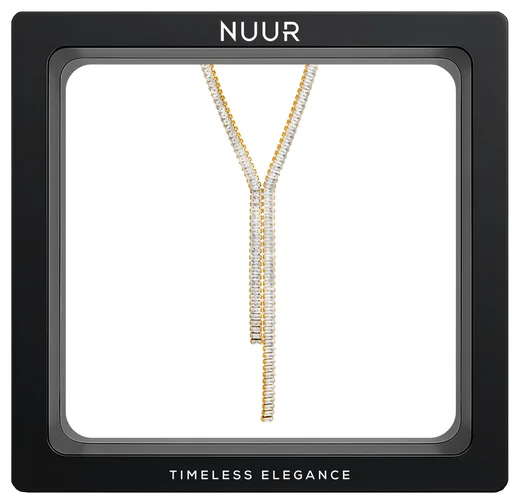
- The Zena Necklace, a Y necklace set with baguette zircon along its whole length, 44 cm with a 5 cm extender.
- The Aurelia Ring, a full eternity setting of zircon with a 17.3 mm inner diameter.
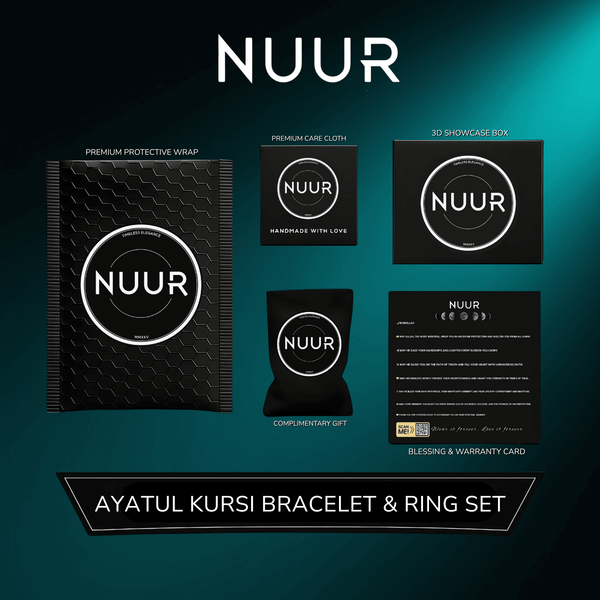
Every order ships free across South Africa, is dispatched within 24 hours on business days and arrives in 1 to 3 working days, gift boxed with a care cloth and a Blessing & Warranty Card. For the bigger picture, read is waterproof jewellery worth it in South Africa.
Questions about waterproof, non tarnish and hypoallergenic jewellery
Is waterproof jewellery the same as non tarnish jewellery?
Not exactly. Waterproof means water, salt, chlorine and sweat do not damage the piece. Non tarnish means the colour does not darken or cloud over time. A 316L stainless steel base with 18K gold plating gives you both.
Is hypoallergenic jewellery always waterproof?
No. A skin friendly coating over brass can be hypoallergenic at first and stop being so once water wears the coating. A stable base metal such as 316L stainless steel is what keeps a piece hypoallergenic and waterproof together.
What material is waterproof, non tarnish and hypoallergenic?
316L stainless steel is the most practical choice. It resists salt and chlorine, does not tarnish in normal wear and is widely used for medical instruments. Solid gold and titanium also qualify but cost more or offer fewer designs.
Does 18K gold plated jewellery tarnish?
It depends on the base. 18K gold plating over brass can fade as the brass reacts underneath. 18K gold plating over 316L stainless steel keeps its colour far longer, because the base does not react with water or air.
Can I wear hypoallergenic earrings in the shower?
If they are 316L stainless steel, yes. All NUUR earrings are 316L stainless steel, so you can shower, swim and sleep in them.
Why do some waterproof pieces still turn my skin green?
Because the base metal contains copper. The green mark is copper reacting with sweat. A piece with a 316L stainless steel base contains no copper, so it cannot leave that mark.